Storyteller’s Revenge: Iceland Express
Introduction
Iceland Express is a VR 360 media production developed as a part of the Udacity Virtual Reality Nanodegree program. The main aim of this project was to create a cohesive story using raw footage shot from a 7mm fisheye lens and convert it into a 360 VR format.
This video is set in three parts of Iceland. There is also a background track to help set the mood for the whole video. There are also some particles falling to represent mist from the clouds above. Unfortunately, the quality of the video is not as crisp and clear as say, a 4k video, but when using the Google Cardboard or another viewer, the images are more clear than in the video below. Regardless of current technology limitations, this project showed the plethora of possibilities and changes that 360 media productions and immersive experiences could accomplish in the future.
View Iceland Express scene below.
iceland360video- vrnd
Process Steps
Statement of Purpose:
Iceland Express is for new 360 Media users and explores three major parts of Iceland in under 3 minutes. Great for the lazy traveler!
Puzzler User Persona:

Nima, 35, Doctor
Nima is a hard working doctor that enjoys keeping up with advanced technology to help further her skills and career. She also likes escaping everyday stresses through viewing immersive experiences. She has briefly experienced VR games using Google Cardboard once or twice, but is generally new to the VR 360 media world.
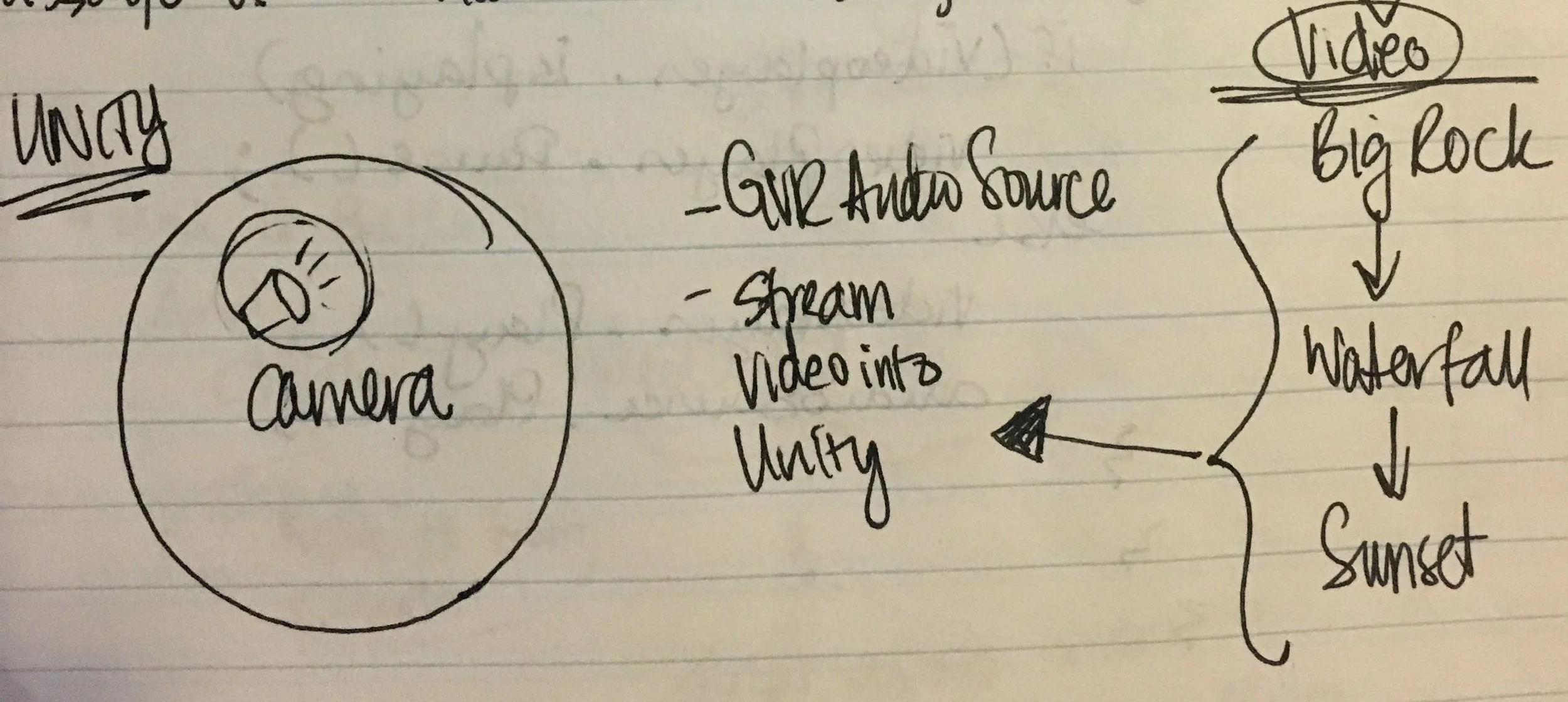
Sketches:
Initial drawings of the story layout, unity environment layout, and general notes on free music for videos.
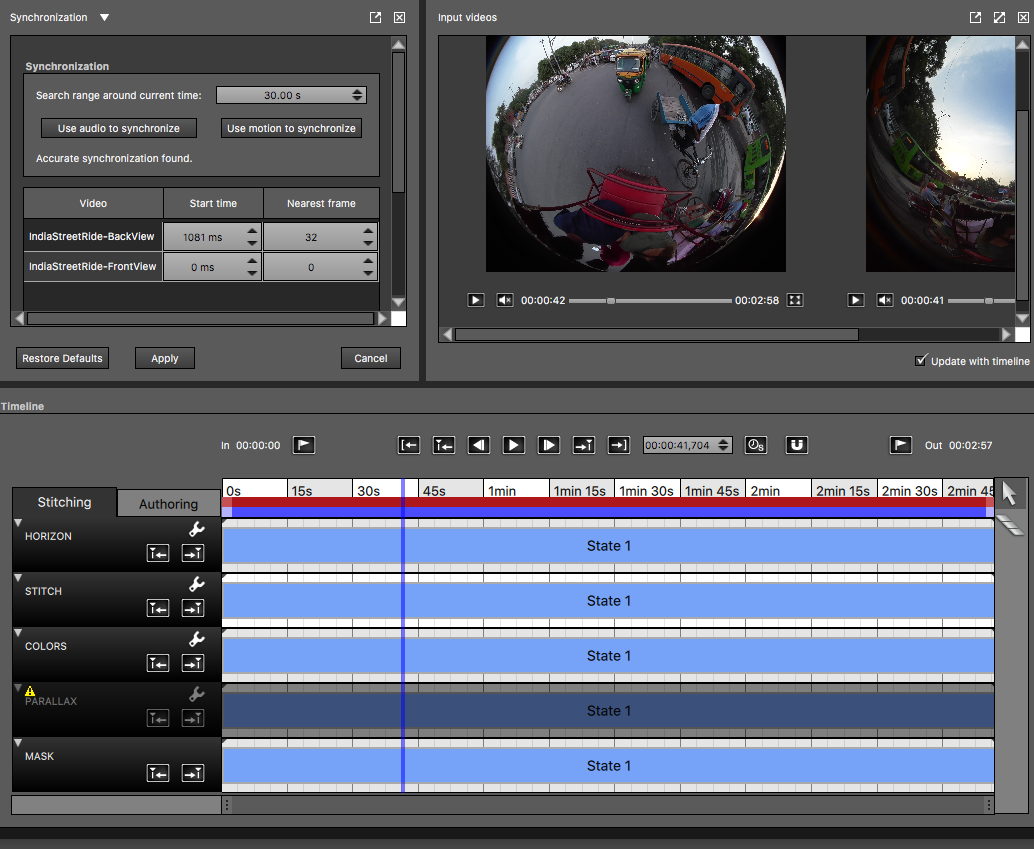

Video Stitching & Development:
Converting 7mm fisheye raw footage to a 360 VR media production. Main tasks are aligning the horizons from different cameras, stabilizing and adjusting the color of the video.
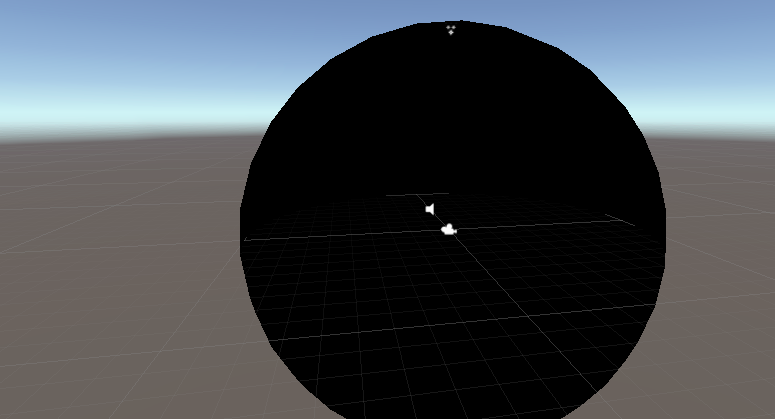
Unity Development
Converting the full experience video into a VR 360 mobile experience.
User Testing
Round One: Video Function
User Tester 1: "I don’t think the car scene is necessary for the story. I also don’t like the harsh wind noise from the clip."
User Tester 2: "A couple of the transitions are abrupt and linger on the video."
After reviewing the feedback from round one, I removed the car scene and kept the scenes stitched together simply.
Round Two: Unity Function
User Tester 1: "The video isn’t streaming on my viewer.”
User Tester 2: "Where’s the video?"
After reviewing the feedback from round two, I fixed the video streaming URL. I also added in scripting changes, so that the viewer can play/pause the video. I also added a background track to the sphere to set the mood while exploring Icelandic sights.
Breakdown of Final 360 Scene
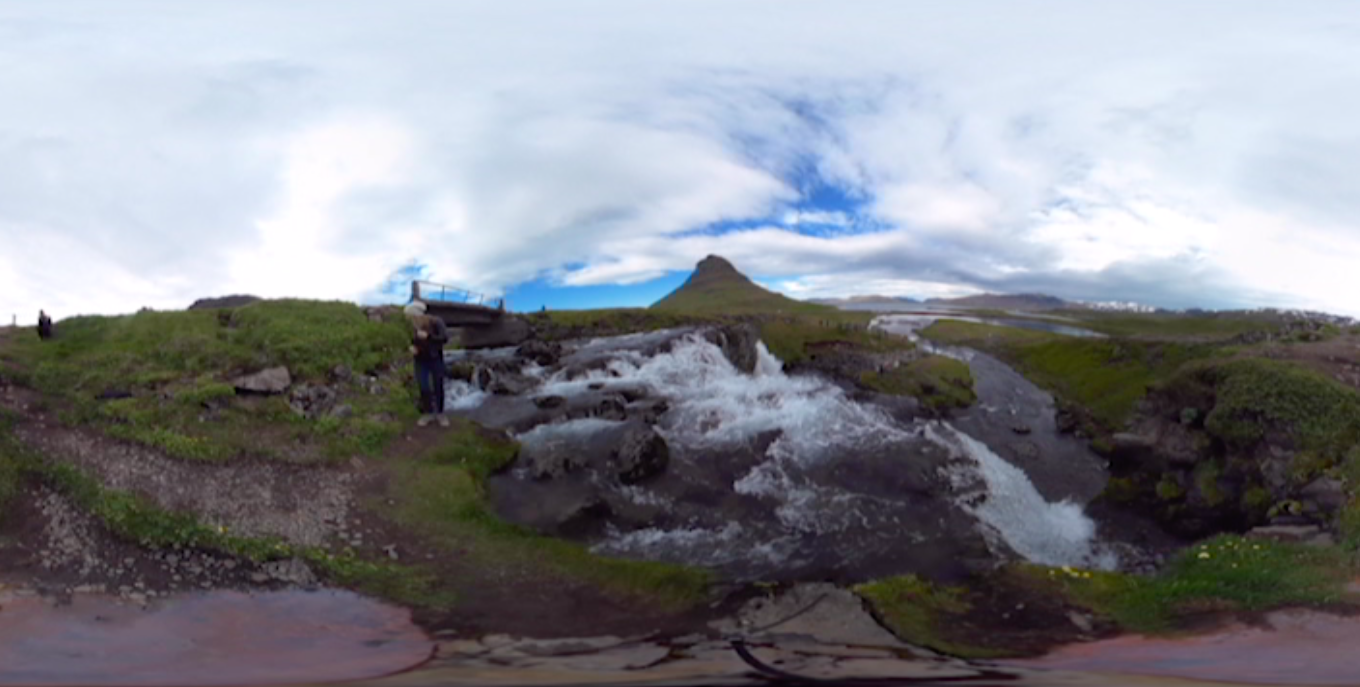
Start:
At the beginning, there are a couple title slides. But, you start out in West Island looking around at Kirkjufellsfoss. What a beautiful sight!
Middle:
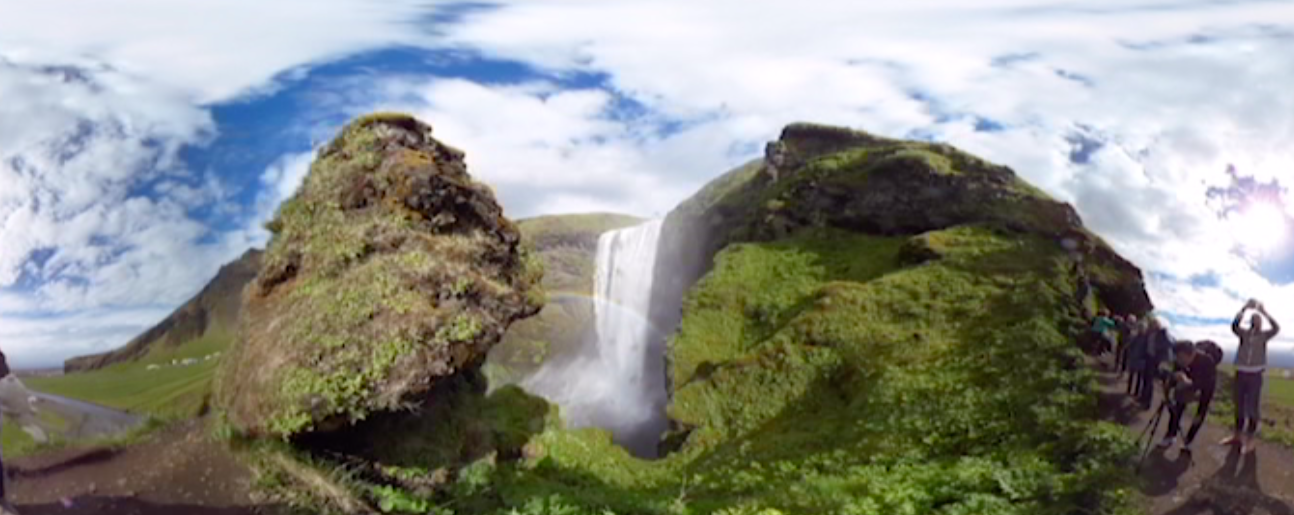
The middle of the video displays a beautiful waterfall and rainbow in South Iceland.
End:
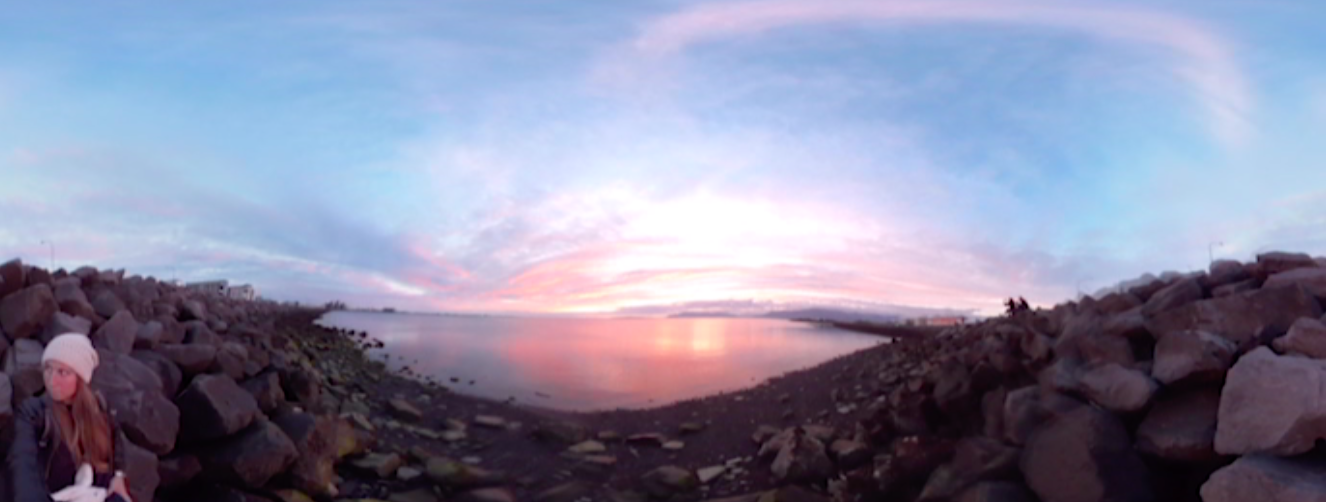
The end of the video is the sunset in Reykjavik.
Next Steps & Conclusion
In conclusion, this project was a good way to explore 360 media production. For this scene, I became familiar with the built-in options that the Google VR SDK package provides. I found the video development and story forming phase to be the easiest part of the entire process. During development, the scale of the sphere around the camera was difficult to gauge. Scripting for the play/pause buttons in the scene were also tedious to get working. Generally, more user testing on the preferred immersive platform is definitely necessary. This media production is not ready to hit the market just yet. In addition, the video quality is low as it streams into the camera sphere on mobile applications. Ideally, the video quality would be a lot higher for future 360 productions. The most important success factor in virtual reality development is performing multiple iteration testing of the applications. This is the only way to figure out if the experience is truly immersive.
Information Sources:
Udacity 360 RawFootage Repository
Asset Store
GitHub Repository